What if studying abroad wasn’t just about exploring a new city—but about making a meaningful contribution to it?
That question sits at the heart of Service-Learning for UNESCO in Florence, a distinctive AIFS Abroad course that invites students to move beyond the traditional classroom and engage directly with the local community. In this program, Florence is more than a destination. It becomes a shared space for learning, reflection, and action.
Offered each spring semester in partnership with the Club for UNESCO Florence, the course encourages students to connect global challenges to local realities while developing practical skills, cultural awareness, and a deeper sense of responsibility as global citizens.
Learning by Doing in Florence
Service-learning for UNESCO is designed around experiential pedagogy. Rather than relying primarily on lectures, the course blends a series of focused seminars with hands-on work in the community. Students collaborate with local partners, take part in guided reflection, and contribute to projects that align with UNESCO’s mission and values.
Early in the semester, students are introduced to the U.N. Sustainable Development Goals (SDGs), addressing issues such as sustainability, equality, education, and responsible consumption. These goals provide a practical framework that helps students understand how global challenges appear at the local level.
Florence is an ideal setting for this approach. As a UNESCO World Heritage city and one of the world’s most visited destinations, it offers a powerful case study in both opportunity and complexity. Students encounter questions of cultural preservation, mass tourism, environmental impact, and overconsumption on a daily basis. The course encourages them to observe these dynamics critically and reflect on their own role as temporary residents in the city.
Exploring Sustainability and Overconsumption
Understandably, overconsumption is a key theme—of resources, public spaces, and cultural experiences. Florence’s popularity brings economic vitality, but it also raises important questions about sustainability and long-term balance. Rather than simply discussing these issues in theory, students work alongside local partners to develop educational initiatives aimed at raising awareness and encouraging dialogue. The focus is on understanding how change happens at the community level—through collaboration, communication, and informed action.
Throughout the semester, students are guided through structured reflection using learning journals, group discussions, and one-on-one meetings. These moments help students connect what they are doing in the community with what they are learning academically, reinforcing the idea that meaningful learning often happens outside the classroom.
Student Accomplishments: Spring 2025
Students in the Spring 2025 cohort demonstrated the impact of this learning-by-doing approach in several ways, including:
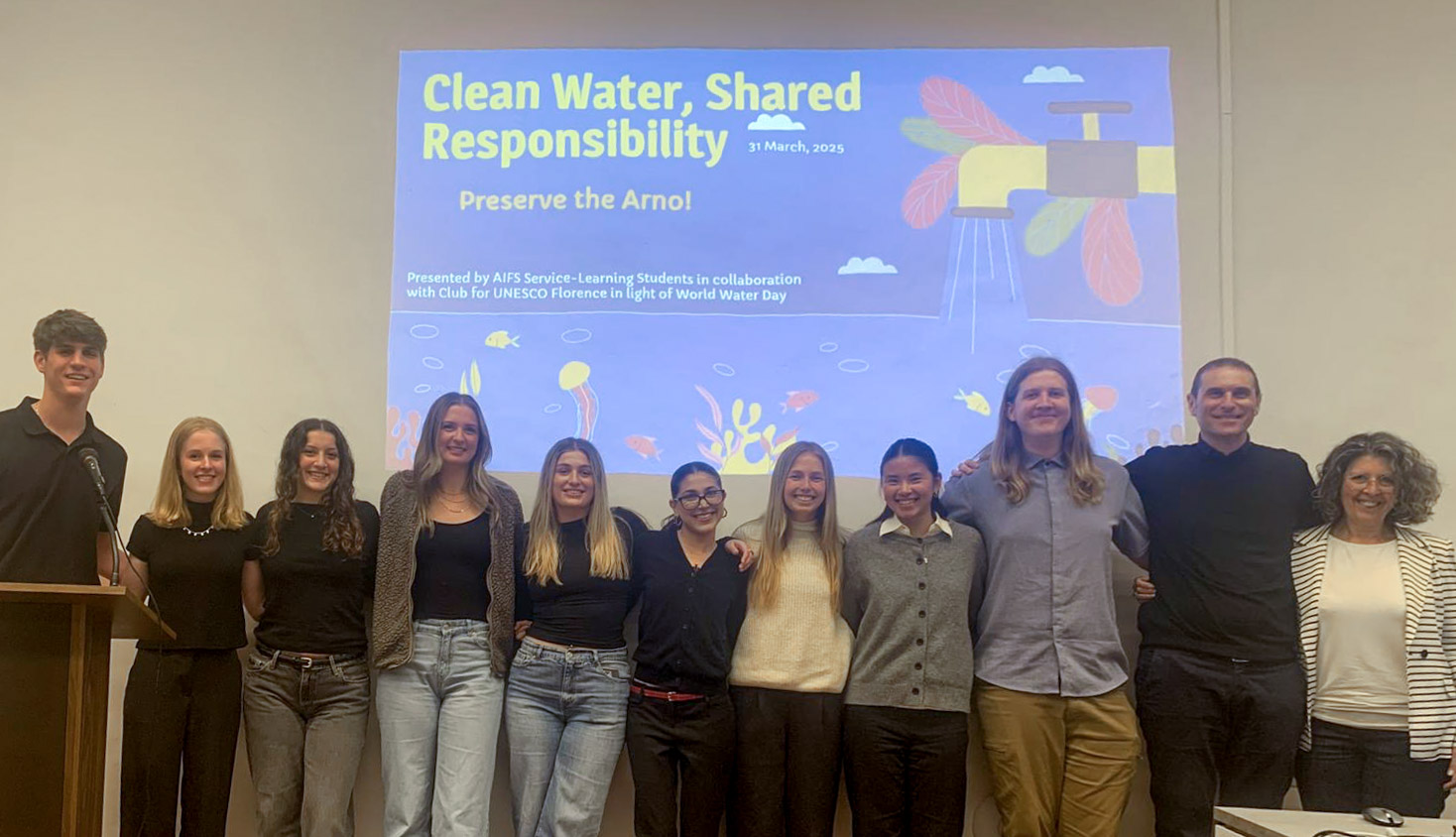
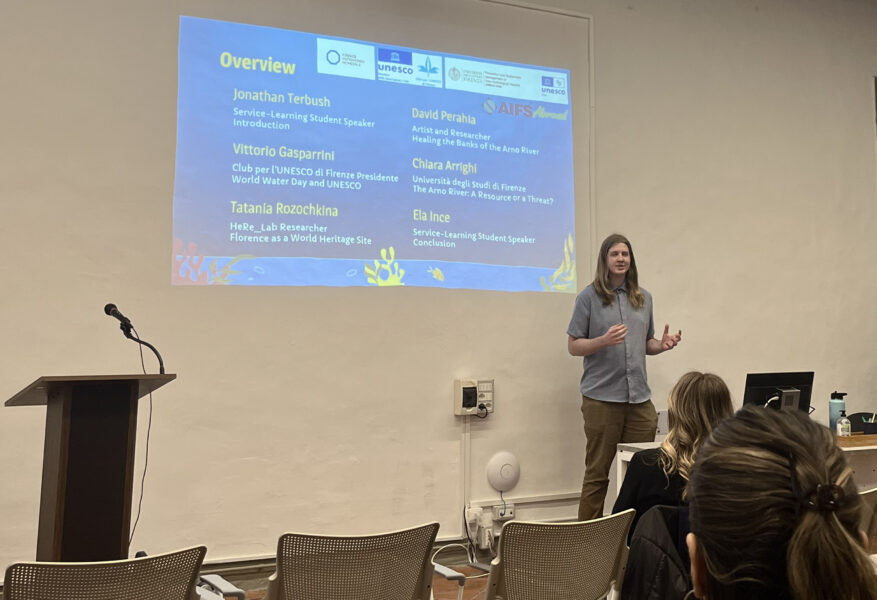
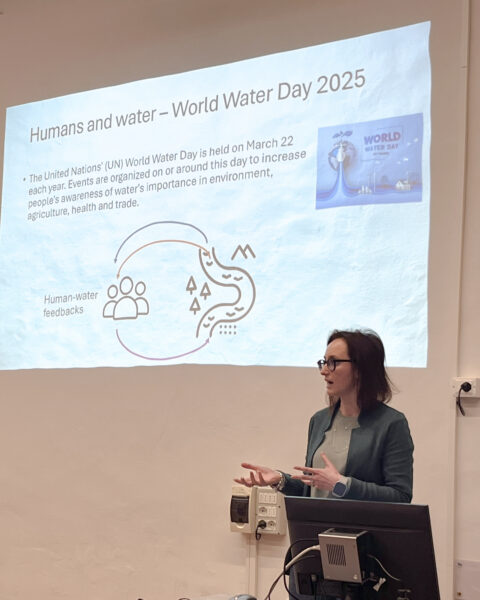
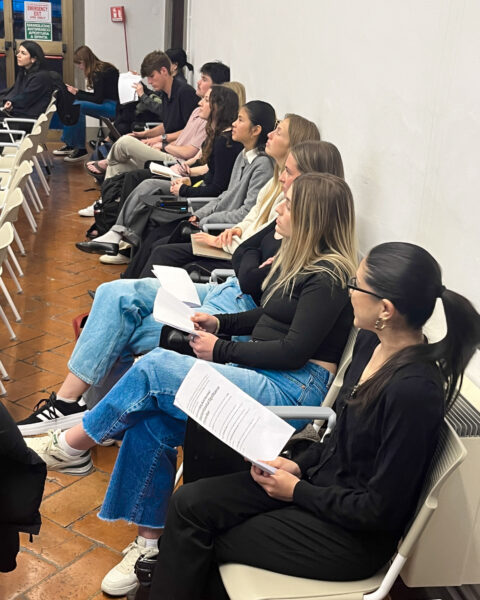
- A public conference organized for World Water Day. Students worked together to plan and deliver a Florence event focused on water sustainability and environmental awareness. Hosted at the AIFS Abroad Global Education Center, the conference brought together students, faculty, and members of the local community for an evening of discussion and exchange. For many participants, it was their first experience organizing a public event—an opportunity to build confidence, leadership, and teamwork skills.
- An educational walking tour in the Oltrarno neighborhood—designed and led by students—in celebration of World Art Day. Rather than focusing on Florence’s most famous landmarks, the tour highlighted lesser-known streets, workshops, and artistic traditions. Students guided participants through the neighborhood while discussing art, craftsmanship, and sustainable cultural consumption, offering a more thoughtful way to engage with the city.
Projects like these prompted students to turn academic concepts into real-world action while making a meaningful contribution to the local community.
What’s Planned for Spring 2026
Building on the success of previous semesters, the Spring 2026 course will expand into new areas of engagement tied to internationally recognized awareness days.
Students will work on two main projects:
International Women’s Day (March 8)
- Students will design an initiative focused on gender equality and women’s roles in culture and society. Through educational events or community-based activities, students will explore how global conversations about equality connect to local Italian contexts.
International Day of Sport for Development and Peace (April 6)
- Students will focus on sports as a tool for inclusion, education, and social change. Students will examine how sports can foster dialogue, well-being, and community connection, linking local experiences to UNESCO’s broader values.
As in previous editions, students will take an active role in planning, organizing, and presenting these initiatives, with guidance from faculty and local partners.
Moving Away from Consumptive Study Abroad
Service-Learning for UNESCO offers students something many don’t expect from study abroad: the chance to slow down and engage deeply with the place they are living in. It challenges the idea of study abroad as passive consumption and reframes it as participation, responsibility, and connection.
For students who want their time abroad to have purpose—who want to learn while contributing to the community around them—this course offers a powerful model. It shows how global ideas like sustainability and citizenship take shape at the local level, and how students themselves can be active participants in that process.
In the end, Florence becomes more than a city to visit. It becomes a classroom—one where learning happens through experience, collaboration, and service.