
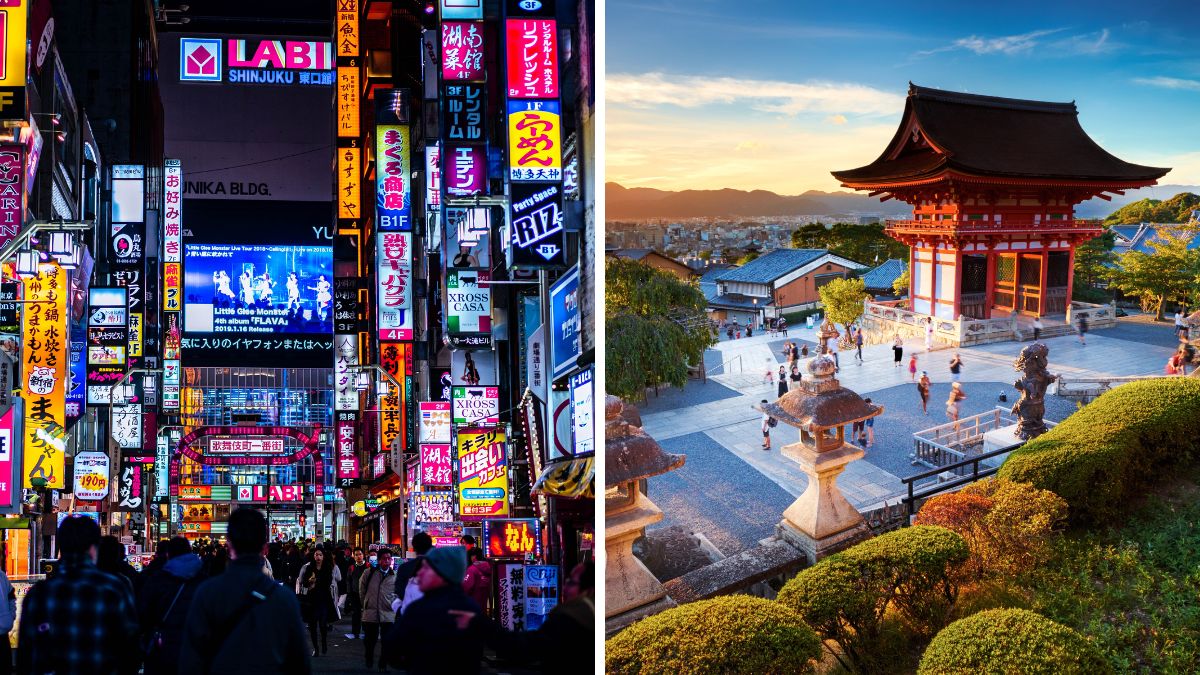
When it comes to studying abroad in Japan, two cities tend to rise to the top of students’ wish lists: Kyoto and Tokyo. Both offer incredible opportunities to experience Japanese culture, make international connections, and explore one of the world’s most fascinating countries. But when comparing Kyoto vs. Tokyo study abroad experiences, the reality is that each city offers a very different version of Japan.
Tokyo dazzles with its massive scale, cutting-edge technology, and nonstop energy. Kyoto offers a more traditional and approachable environment where traditional customs remain an important part of daily life. Below, we’ll go over some of the major differences between Tokyo and Kyoto, so you can decide which is the best city to study abroad in Japan—depending on your personal preferences.
Trying to decide between studying abroad in Kyoto or Tokyo? Here’s a closer look at how these two destinations compare!
Overall Vibe: Traditional Kyoto vs. Fast-Paced Tokyo
Spanning roughly 5,000 square miles and home to a population of about 37 million, the Tokyo metropolitan area is one of the largest and most densely populated places in the world. In Japan’s capital city, you’ll find neon-lit districts, towering skyscrapers that offer expansive views of the sprawling megalopolis, packed train stations, and endless, 24/7 entertainment options that give the city an exciting and fast-paced energy.
Whereas Tokyo is racing toward the future, Kyoto is a sanctuary for traditional Japanese culture and customs. Known as the country’s cultural capital, Kyoto is revered for its historic neighborhoods, traditional wooden architecture, idyllic gardens, and peaceful temples and shrines. While Kyoto offers all the amenities of a modern city, it often feels quieter and more manageable than Tokyo.
For students who want a balance between city life and cultural immersion, with easy access to major cities and natural landscapes, Kyoto is an ideal place to study abroad and experience daily life in Japan.
Cost and Daily Life Comparison
Budget plays an important role for many students when deciding the best city to study abroad in Japan. While neither destination is as expensive as major U.S. cities, Tokyo generally comes with higher day-to-day costs than Kyoto. Dining, entertainment, transportation, and housing typically require a larger budget in Tokyo.
Kyoto can be more affordable for study abroad students, particularly when it comes to everyday expenses and local transportation. The city’s smaller footprint means shorter commutes and easier access to attractions, so students can explore more of the city without spending as much money getting around.
In addition to cost, daily life feels different as well. In Tokyo, it’s easy to find yourself constantly on the move, navigating a massive city that never seems to slow down. In Kyoto, many students find it easier to establish routines, become familiar with neighborhoods, and build relationships with local businesses and community members. For many students, that slower pace makes it easier to adjust to daily life and feel at home.
Transportation and Walkability
Japan is famous for its superb public transportation, and both cities are incredibly well connected. Tokyo’s transportation system is extensive, allowing students to access nearly any part of the city via train or subway. However, with hundreds of stations across the city, more than a dozen subway lines, and millions of daily passengers, it’s easy to feel overwhelmed at the sheer size of the network.
Kyoto offers a simpler, more accessible experience. The city can be navigated using a combination of buses, trains, taxis, walking, and cycling. Many student-friendly neighborhoods are highly walkable, allowing students to explore local cafes, markets, and cultural sites without spending hours commuting.
For students who want an easier transition to life in Japan, Kyoto’s manageable size can be a major advantage.
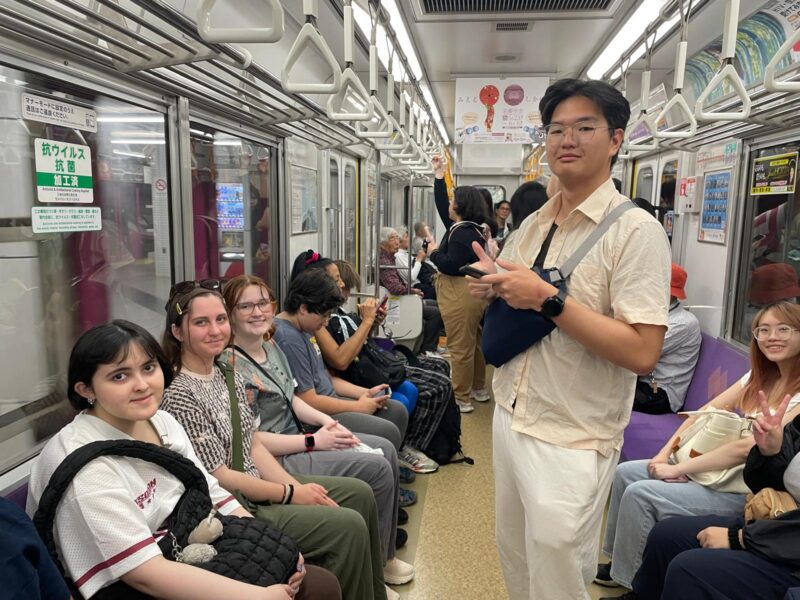
Interested in experiencing student life in Kyoto?
AIFS Abroad’s summer study abroad program in Kyoto allows you to live in Japan’s cultural capital while exploring the language, history, and traditions that make the city so special.
Cultural Immersion
When discussing Kyoto vs. Tokyo student experiences abroad, cultural immersion is one of the biggest areas where Kyoto pulls ahead. After all, while Tokyo is Japan’s political capital, Kyoto is known as its cultural capital.
As Japan’s largest city, Tokyo certainly offers access to Japanese culture, but much of the city is defined by its global influence, modern development, and international atmosphere.
As the country’s well-preserved former capital, Kyoto provides a more direct connection to many of Japan’s longstanding traditions. Here, students can experience:
- Historic temples and shrines
- Traditional tea ceremonies
- Seasonal festivals
- Local artisan workshops
- Preserved historic districts
- Japanese customs and etiquette in everyday life
With approximately 2,000 temples and shrines throughout Kyoto, opportunities to engage with Japanese history and culture are always close at hand.
Food, Nightlife, and Student Activities
Both Kyoto and Tokyo offer incredible food and entertainment for college students, but they do so in different ways.
Tokyo’s size means virtually unlimited options. Students can find everything from fine dining and themed cafes to live music venues, hidden izakayas, sporting events, anime culture, student clubs and campus events, and nightlife districts that stay active well into the early morning.
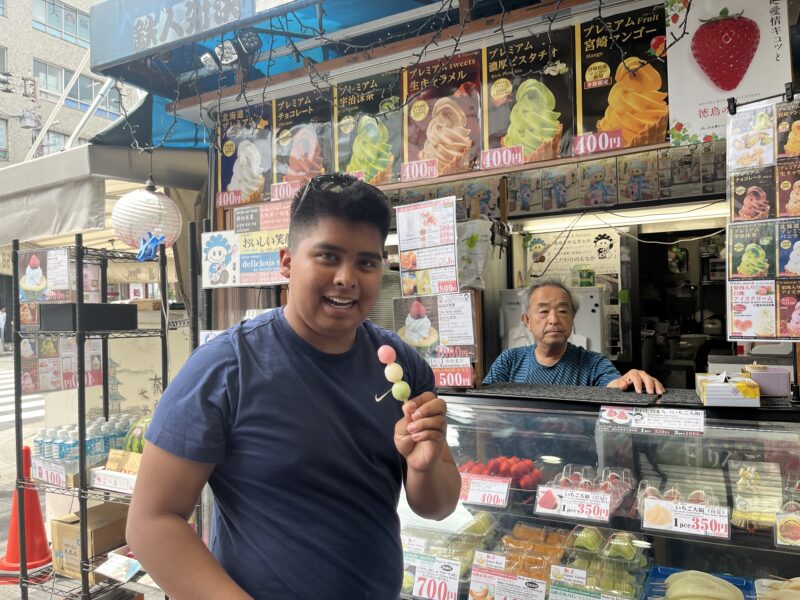
Kyoto offers a more immersive experience. Instead of scrambling to land reservations at the latest trendy spot, many students find themselves returning to favorite cafes, neighborhood restaurants, and local markets as they settle into daily life. Kyoto’s food scene is one of the most celebrated in Japan, famous for traditional Japanese cuisine, matcha and matcha-infused desserts, local markets, seasonal specialties, and neighborhood restaurants where students can become regulars during their time abroad.
Kyoto also offers plenty of opportunities to get involved through university clubs, Buddy programs to practice speaking Japanese with locals, cultural workshops, and community events. Its nightlife, particularly around downtown Kawaramachi and universities, tends to feel more intimate and less overwhelming than Tokyo’s major entertainment districts.
Additionally, students studying abroad in Kyoto will be just a short train ride away from Osaka—a city famous for its lively nightlife, comedy scene, and mouthwatering cuisine.
Weekend Travel Options
One common misconception is that choosing Kyoto over Tokyo means sacrificing access to the rest of Japan. In reality, Kyoto’s location makes it one of the country’s best travel hubs.
From Kyoto, students can easily visit other locations via Shinkansen (bullet train) and other public transportation options, including:
- Osaka in about 15 minutes
- Nara in under an hour
- Kobe for food and waterfront attractions
- Lake Biwa for outdoor recreation
- Hiroshima for weekend trips
- Tokyo in approximately two hours
Of course, Tokyo also offers excellent travel connections, particularly for flights. But with the speed, convenience, and affordability of the Shinkansen, taking the bullet train is often better for regional travel.
Tokyo vs. Kyoto: What’s the Best City to Study Abroad in Japan?
Keep in mind that when comparing Tokyo vs. Kyoto, neither city is inherently “better” than the other. Which one is right for you depends on who you are and the kind of study abroad experience you’re seeking.
Tokyo may be right for you if you:
- Thrive in large, fast-paced cities
- Want access to endless entertainment options
- Are interested in modern Japanese culture, technology, and business
- Enjoy living in dense, urban environments
- Prefer a more international city
Kyoto may be right for you if you:
- Want deeper cultural immersion
- Prefer a more manageable city size
- Are interested in Japanese history, language, and traditions
- Enjoy balancing academics with exploration
- Want easier access to local communities and everyday cultural experiences
For students prioritizing authentic cultural engagement and a more approachable introduction to life in Japan, Kyoto is often the stronger choice.
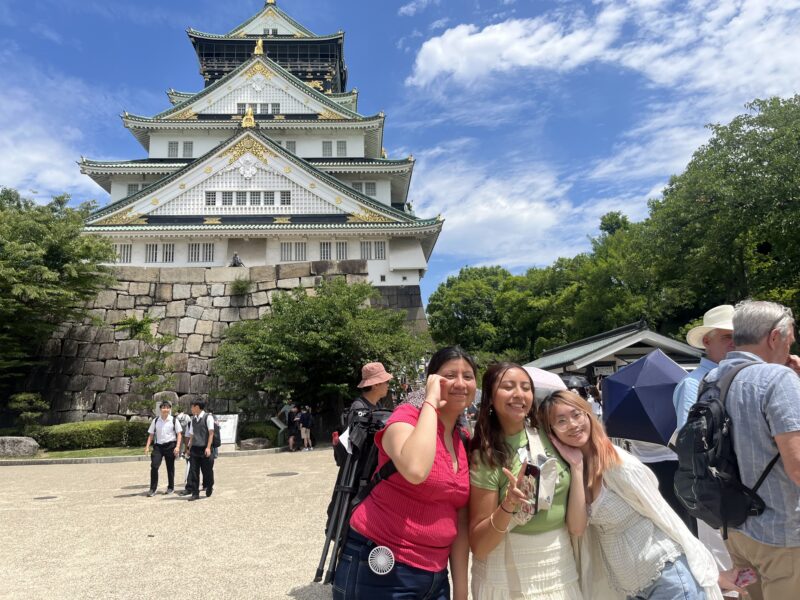
Study abroad in Kyoto this summer with AIFS Abroad and discover all Japan has to offer.
When comparing Kyoto vs. Tokyo study abroad experiences, there’s no wrong answer. Both cities offer unforgettable opportunities for academic growth, cultural exploration, and personal development.
However, if you’re looking for a destination that combines rich traditions, a welcoming student environment, manageable city life, and easy access to the rest of Japan, Kyoto stands out as one of the best places to study abroad in the country.
Ready to see why so many college students choose Japan’s cultural capital? Explore AIFS Abroad’s summer study abroad program in Kyoto and start planning your adventure today.