
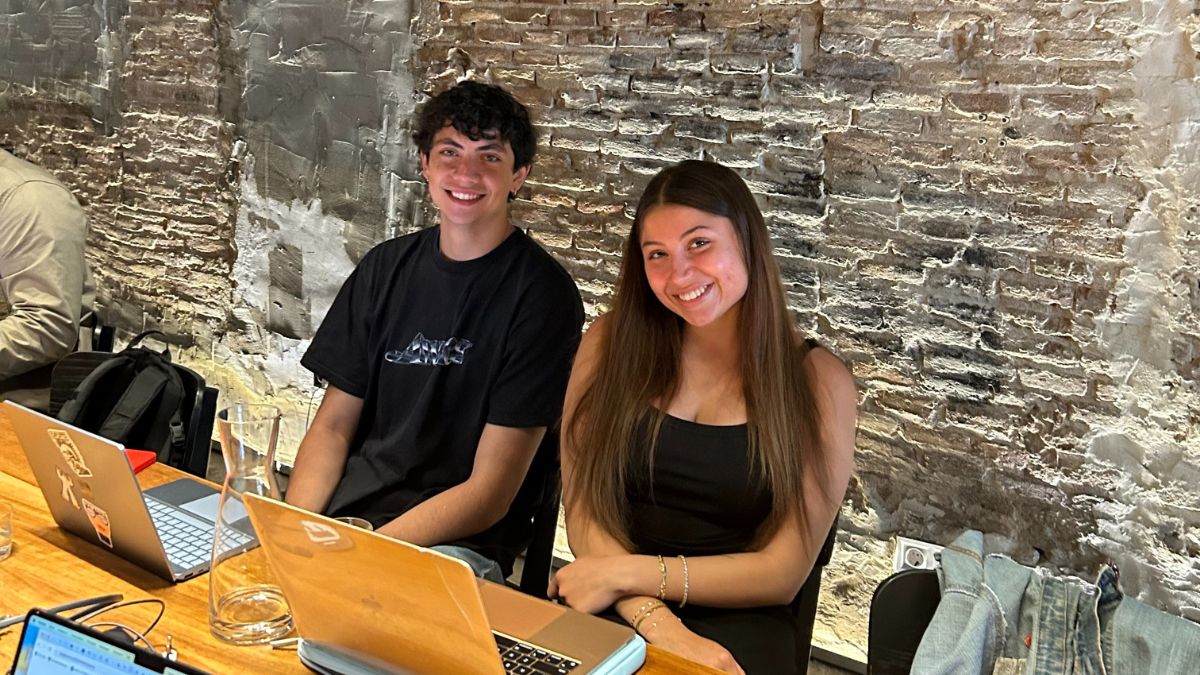
Want to learn how Europeans approach work? Interning abroad is one of the best ways to do it. Just like any aspect of life, work culture in Europe can vary greatly depending on your location and organization. However, there are certain similarities across the region that differ from the intensive, fast-paced, productivity-focused environment common in American workplaces. Below, we’ll go over some of the main differences between work culture in Europe and the U.S.—and what previous AIFS Abroad interns have observed firsthand.
Hear from alumni of AIFS Abroad internship programs and discover how European work culture compares to the United States!
Work-Life Balance
One of the most fundamental differences between American and European work culture is the philosophy behind why people work in the first place. In the U.S., career goals and professional identity tend to take center stage—but in much of Europe, employees’ personal lives and relationships are prioritized. While many American workplaces expect employees to give up more free time and personal commitments, strong worker protections and a focus on creating a healthy work-life balance are more standard across Europe. That doesn’t mean Europeans are unconcerned with professional success or career advancement. Rather, many workplaces across Europe operate with the understanding that people tend to do their best work when they have time to rest and maintain relationships outside the office.
For international interns, this creates space for more than just professional growth, allowing them to enjoy free time, immerse themselves in the local culture, and make the most of their time outside the workplace.
Abigail, who did a social media marketing internship in Barcelona, experienced this balance firsthand:
“The main difference I experienced was the work-to-live versus live-to-work mentality. In the U.S., I have noticed that people are very career-focused and often have work or ‘what they do’ at the center of their lives… In Spain, they work as a means to live, but their family, social life, and hobbies are at the center. They work less and have much closer personal relationships with the people they work with… I loved their work-life balance, and as I prepare to graduate, I am looking for jobs that will give me a life I want, not just a career I want.”

Workplace Relationships
A slower pace and greater emphasis on personal connection naturally lead to closer relationships within the workplace, something many American interns find refreshing. In the U.S., professional and personal lives tend to be more distinct, but in Europe, the line between colleague and friend is often much more fluid. For international interns, this is a huge bonus—often making it easier to acclimate to their new host city and build a strong global network.
Julia, who completed a marketing internship in Lisbon, described how well her colleagues at her host company treated her:
“[My host company’s] work culture was extremely close-knit and welcoming. My first day was incredibly memorable because I remember laughing a lot, feeling like my goals were respected and heard, and enjoying an authentic Portuguese lunch. I worked with four male supervisors and two male interns. I was the only girl in the office, and the first female [team member the company] had ever had. I felt extremely protected and was always reassured that my voice was important to everyone.”

Professional Environment
Full-time interns can expect to spend up to 40 hours per week at their host company, so having an enriching and comfortable professional environment is important. And not only is the professional environment about the campus itself and its amenities or offices, but the very people who populate those spaces. Having stronger, friendlier workplace relationships can lay the groundwork for a more relaxed, open environment—something that’s more common in Europe and prioritizes collaboration and connection over rigid structure and productivity.
Carin, who did dual internships in sports technology and public health in Galway, emphasized this connection between workplace environment and relationships:
“Things are a bit more fast-paced in the United States and Canada compared to here, where the workday feels more relaxing and allows me to get to know my coworkers better.”

Workday Structure

The structure of the workday may look and feel different in Europe than in the United States, where most offices follow a strict 9 to 5 schedule. For many Americans interning in Europe, it’s a welcome change. Rather than a constant push to maximize output, European workplaces tend to build in more breathing room and flexibility, along with holidays and paid time off, trusting staff to manage their time and get the job done.
For college students who are used to having some structure to their days but are ready to be more independent, an internship in Europe provides a valuable middle ground. It can help them ease into professional life while building the skills they’ll need to succeed after graduation in the more structured American workforce.
Emily, who did a Study + Internship program in Rome, noticed how work schedules in Italy were often more open compared to the U.S.:
“One of the most notable differences from an American work environment was the pace and structure of the workday. In Italy, there was often a more laid-back approach, with longer lunch breaks and a greater emphasis on personal relationships, which created a more fluid work schedule. In contrast, American workplaces tend to emphasize efficiency and time management, often operating on a more rigid schedule. There was also a stronger emphasis on collective decision-making, with group discussions guiding decisions rather than a top-down approach that might be more common in some American companies.”
Inclusivity and Community Focus
Another hallmark of European work culture that interns frequently highlight is a strong sense of inclusivity and community, where every voice is valued, and collaboration is baked into the culture. Emily felt this was especially true at her art gallery internship in Rome:
“The company culture at [my internship] was collaborative, creative, and deeply rooted in social impact. It was a dynamic, arts-driven environment where the focus was on fostering community engagement and raising awareness about social justice issues through art and events.There was a strong sense of inclusivity, with everyone’s ideas valued, and collaboration was key to achieving the company’s goals.The atmosphere felt more relaxed compared to traditional American workplaces, with a focus on building relationships and trust over formal structures.”
Formality and Hierarchy
Worried about intern-manager dynamics? At plenty of white-collar jobs in the U.S., keeping a certain amount of space between yourself and the boss is expected, but that’s not always the case overseas. Many European offices are more collaborative and less hierarchical, with managers who are approachable and titles that don’t demand distance from subordinates as they might back home. This egalitarian structure fosters communication between all professional levels and makes it easier for interns to feel like valued contributors rather than a single link at the bottom of the chain of command.
AIFS Abroad international interns are usually placed in small to mid-sized companies where they’ll work more closely with experienced professionals and managers (which, in some cases, includes the founder/CEO). Not only can this relationship further break down formal hierarchies, but it also gives interns direct exposure to a wider range of workplace operations and direct mentorship from senior professionals who may be harder to access in larger organizations.
Caleb, whose internship gave him hands-on film experience at the Cannes International Film Festival, highlighted this distinction at his host company in France:
“The company culture was very different from that of the United States. While it was a professional environment, it was not as formal between employees and the management… My boss told me… that I did not need to speak so formally. This was very interesting to me because I feel like that is not as common in workplaces in the United States.”
Intern abroad in Europe with AIFS Abroad and discover how far international experience can take you.
Interning abroad in Europe is a chance to fundamentally examine your relationship with work and what’s available to you as a young professional preparing to enter the workforce. Whether it’s learning to share a long lunch with colleagues, embracing a collaborative decision-making process, or creating a healthy work-life balance, European work culture offers a perspective on professional life that will stay with you throughout your career.
Ready to experience European work culture for yourself? AIFS Abroad offers exciting intern abroad programs across Europe and the wider world—all with the valuable inclusions we’re known for: trusted on-site staff, enriching activities and excursions, career readiness programming, 24/7 emergency assistance, housing, and more.