Fall semester is a wonderful time to study or intern abroad and discover new seasonal traditions. With a fall semester abroad, you’ll have the chance to witness unique local customs that mark this time of year, all while you earn academic credit or gain professional experience. In addition to some incredible autumn harvest festivals, there are many unique fall holidays celebrated around the world that honor national pride, cultural heritage, or spiritual reflection. Experiencing these holidays firsthand offers the chance to uncover a deeper appreciation for autumn and its seasonal traditions—long after you return home.
Experience the magic of fall abroad—discover some of the unique autumn holidays you can celebrate when you go abroad with AIFS Abroad!
Chuseok – South Korea
Chuseok, also called Hangawi or “Korean Thanksgiving,” is a traditional holiday celebrated in South Korea. This three-day holiday celebrates the fall food harvest and is a chance for families to return to their hometowns, reconnect, and share traditional dishes. Chuseok is celebrated on the 15th day of the 8th month of the lunar calendar, which is generally in September or October. Just as Americans gather for Thanksgiving each November, families across Korea come together to share beloved Chuseok dishes passed down through generations.
If you study or intern abroad in Seoul, you’ll notice the city become busy as people prepare for the holiday and then grow calm as residents travel to their hometowns in the country to reconnect with family. It’s a wonderful time to experience Korean culture more deeply—and if you’re lucky, you might even be invited to join a local family for a Chuseok feast!
Halloween and Samhain – Ireland
While Halloween and Samhain have different origins—Samhain hailing from Pagan mid-autumn traditions and Halloween stemming from the Christian celebration of All Saints’ Day—many Samhain influences can be found in the modern practice of Halloween, both of which are observed on October 31st. In Ireland, where both traditions trace their roots, people will often celebrate both holidays on the same day.
In ancient Ireland, Samhain was believed to be a division of the year that marked the time when the veil between the worlds of the living and dead became thinnest. Ancestral spirits were honored and invited home, and people wore costumes to disguise themselves as harmful spirits, which they wished to avoid. Today, Samhain’s ancient spirit weaves through modern Halloween festivities, and provides insight into ancient Celtic traditions. Study or intern abroad in Ireland and you can learn more about these centuries-old Celtic customs, all while you enjoy a familiar fall holiday.
La Toussaint, All Saints’ Day – France
All Saints’ Day, also known as All Hallows’ Day, follows Halloween or All Hallows’ Eve. It is a day of Christian solemnity celebrated in honor of all saints of the Church. This holiday is celebrated in many countries across the world on November 1st, most notably in European and Latin American countries with large Christian populations.
In France, where it is known as “la Toussaint,” it is an especially popular public holiday. On la Toussaint, people attend church services in memory of all the saints. Then, in the evening, families gather together to visit cemeteries, where they honor their deceased relatives by placing heather, chrysanthemum flowers, or immortal wreaths on their graves. They may also light candles to symbolize happiness in the afterlife. If you study or intern abroad in France, you may see families gathered together on this day, bouquets of flowers in their hands as they stroll through city streets, recounting their favorite memories of loved ones who have passed.
Day of the Dead – Latin America
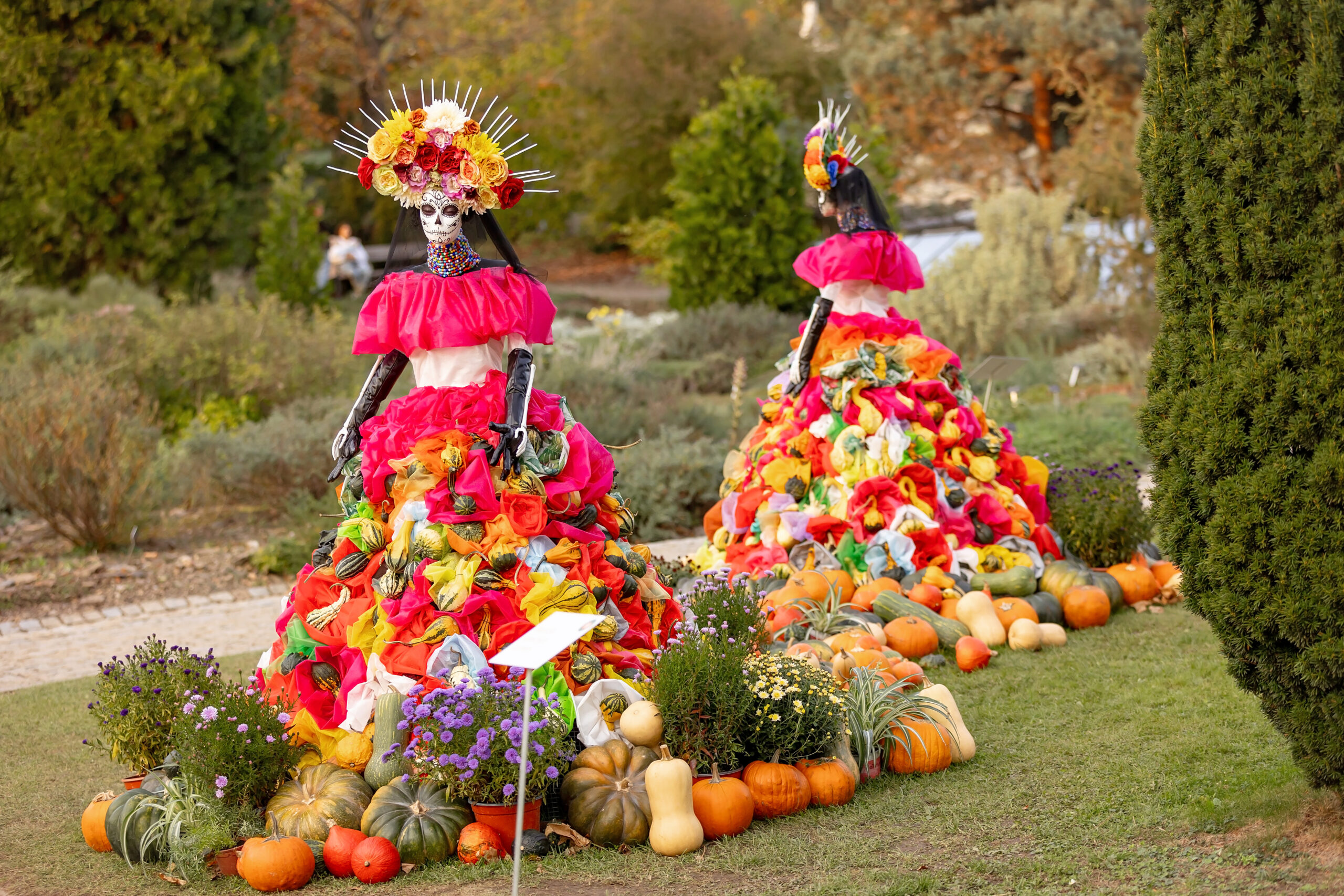
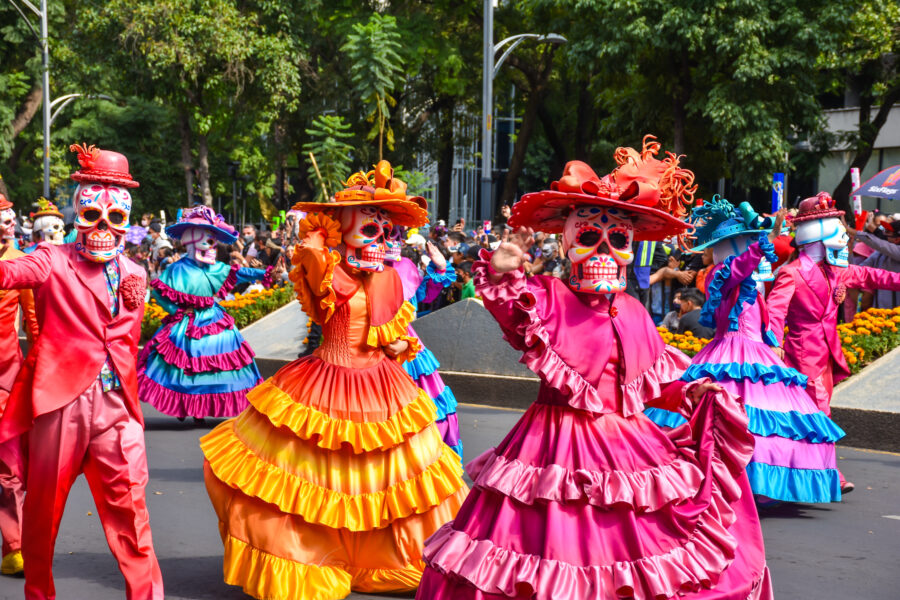
The Day of the Dead (“Día de los Muertos” in Spanish) is a holiday celebrated on November 1 and 2 in some Latin American countries, particularly Mexico. During this holiday, families reunite to create offerings, or “ofrendas,” to honor and remember their family members who have passed. These offerings are decorated with bright yellow marigold flowers, photos of the deceased, and their favorite food and drinks, encouraging their departed family members to visit from beyond, hear their prayers, and join in the celebrations. While it may sound like a somber event, the Day of the Dead celebrates life and death and the memory of their deceased loved ones, rather than mourn for them.
Each country that observes Día de los Muertos has its own way of honoring the occasion. In Costa Rica and Argentina, the holiday tends to be more reflective, aligning closely with the religious traditions of All Souls’ Day. In Argentina, families often bake dough figurines shaped like angels, doves, hearts, crosses, and ladders (symbolizing the soul’s descent from heaven so that they can partake in the celebration and then reascend afterwards). Whether you study or intern abroad in Latin America, this is a meaningful time to experience the beauty of remembrance and the cultural significance of honoring those who came before.
Oxi Day – Athens, Greece
Oxi Day (also spelled “Ohi” or “Ochi”) is a national holiday celebrated annually in Greece on October 28. This holiday commemorates the day in 1940 when Greek Prime Minister Ioannis Metaxas denied Benito Mussolini’s request to allow Italian troops to enter Greece. In the days following, word of Metaxas’s refusal spread across Athens, where people took to the streets shouting “Oxi!”, meaning “no!” in solidarity with their Prime Minister’s message. It is a day that symbolizes Greece’s resistance to the fascist regime of the Axis Powers and represents the bravery and heroism of the Greek people and their national identity.
Study or intern abroad in Athens, the city’s capital, and you can watch the largest Oxi Day celebrations come to life. Go to the city center, where you’ll see marching bands, schoolchildren, clubs, and other groups marching through the city in the Oxi Day parade. It’s an incredible time to soak up Greek culture and better understand their national pride.

Guy Fawkes Night – the United Kingdom
Guy Fawkes Night is not a public holiday, but it is a fun fall tradition that anyone studying or interning abroad in England may want to take part in. Also called Bonfire Night, this celebration occurs every November 5th to commemorate the same day in 1605 when Guy Fawkes and several other co-conspirators failed to blow up Parliament and assassinate King James I. When the “Gunpowder Plot,” as it is known, was exposed and stopped, British citizens lit bonfires all over London to celebrate the failed assassination.
While some of the largest celebrations take place in London, England, you can find bonfires, fireworks, and other related festivities going on across the United Kingdom. Wherever you are in the U.K. during the fall semester, we recommend you find a local festival celebrating this day and attend for a night of revelry and blazing displays!
Oktoberfest – Germany
Oktoberfest is another notable non-holiday and one of the most famous fall celebrations in the world. Its popularity and international recognition draw people from around the globe to Germany to take part in the festivities.
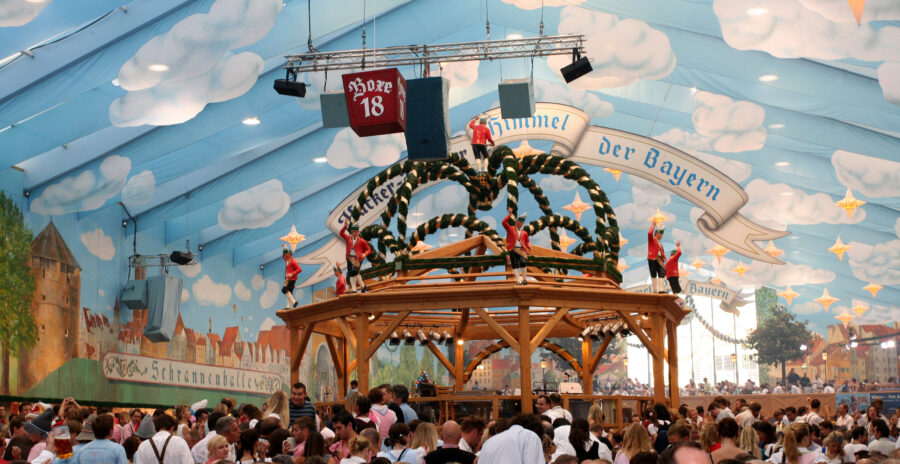
While Oktoberfest is a beer festival, it’s about much more than just sampling the local brews. The festival commemorates the wedding of Crown Prince Ludwig and Princess Therese on October 17, 1810, in Munich—today it’s a lively celebration of Bavarian culture. Attendees immerse themselves in local customs, enjoy traditional music, and have the opportunity to dress in Bavarian folk costumes—women in Dirndls and men in Lederhosen. For those studying or interning abroad in Central Europe, particularly the Czech Republic, Austria, and, of course, Germany, Oktoberfest offers a fun and authentic cultural experience you won’t find anywhere else.
Discover fall holidays around the world—study or intern abroad with AIFS Abroad!
Study or intern abroad in autumn with AIFS Abroad and experience unique seasonal festivities to expand your cultural horizons and celebrate with locals. With AIFS Abroad’s valuable program inclusions, such as coordinating your housing to providing things like trips and excursions, comprehensive insurance, 24/7 emergency support, on-site staff, and cultural and social activities, you’ll take comfort in knowing you’ll have support throughout your entire experience abroad.