
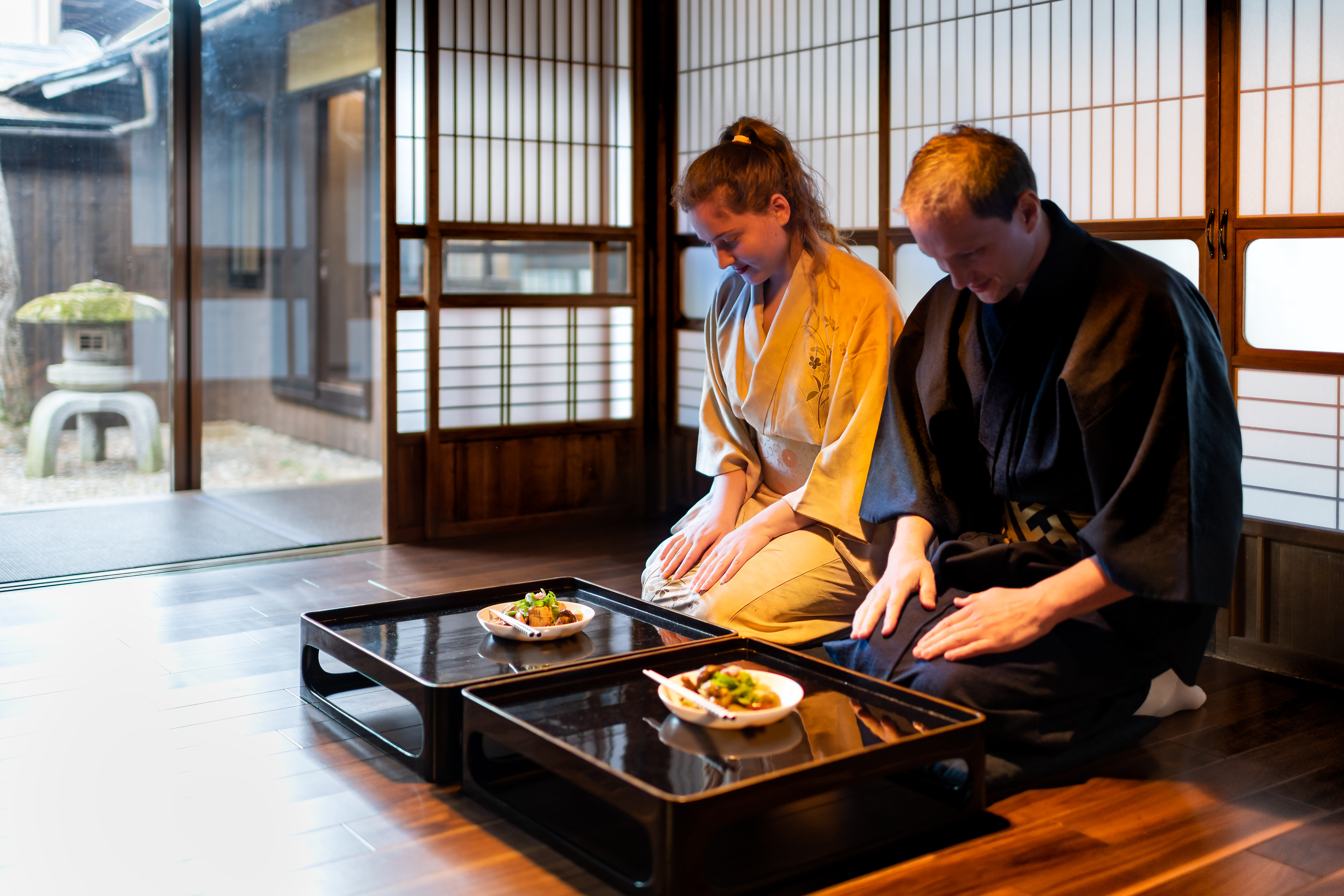
Studying abroad in Japan is an exciting prospect for many students, giving them the chance to step beyond the classroom and experience Japanese culture and language in their everyday lives. While every culture has its own social norms, many Japanese customs and rules for etiquette may be unfamiliar to study abroad students traveling to the country for the first time.
Fortunately, you don’t need to memorize every single rule of Japanese etiquette to show respect. By understanding a few of the most important everyday expectations, you can navigate your study abroad program more smoothly and connect more thoughtfully with the people and places around you.
Discover some of the most important examples of Japanese etiquette for students and how they can help you make the most of your experience in Japan!
Bowing, Greetings, and Gestures
Greetings are an important part of daily life in Japan. While handshakes are becoming more common in certain international settings, bowing remains the traditional way to greet people, express gratitude, apologize, and show respect.
As a student, you don’t need to master different bowing angles or formal business etiquette—simply bend at the waist while keeping your hands by your sides. A small, polite bow when greeting professors, host families, or local community members is generally appreciated. In casual settings or when returning a greeting from a shop owner, for example, a nod of the head may suffice rather than a deep bow.
It’s also common to greet people with everyday Japanese phrases such as:
- Ohayō gozaimasu (“good morning”)
- Konnichiwa (“hello”)
- Konbanwa (“good evening”)
Common Gestures
In addition to these everyday phrases, there are several common gestures that Japanese people regularly use. They’re especially helpful when overcoming language barriers. For example, if you’re asking for something or making a request, it’s considered polite to bring your hands together as if you’re praying.
Another important gesture to keep in mind is the okane (“money”) gesture, commonly used either by the buyer or seller to politely suggest it is time for payment. This gesture is formed by making a circle with your thumb and index finger (similar to an “ok” hand gesture) with the tips of the touching fingers pointing up and the back of the hand facing down.
Removing Shoes Indoors
One of the most important customs in any Japan etiquette guide is removing your shoes indoors. It’s customary to take off your shoes when entering someone’s home and many traditional accommodations, as well as other indoor spaces such as temples, schools (or classrooms), and certain restaurants. Indoor slippers are often provided, and you should put them on after removing your shoes.
Watch for entryways with shoe racks or signs indicating you should remove your shoes. You may also encounter separate slippers for bathroom use. While it may feel unusual at first, you’ll likely get used to this routine quickly and appreciate how much cleaner it keeps indoor spaces.
If you’re studying abroad in the summer, plan to wear shoes with socks if you know you’ll be entering an area where you may have to remove your shoes, as going barefoot can be viewed as impolite.
Public Transportation Manners
Japan’s public transportation is famously efficient, and good etiquette helps keep it that way. When waiting for a train or subway, there will sometimes be marks on the floor showing where the doors will open; stand to the side of the opening doors so you don’t impede exiting passengers.
Also, keep conversations on public transportation quiet, and avoid phone calls or playing videos from your phone without headphones. Many commuters use transit time to rest, read, or simply enjoy a peaceful ride.
Japanese culture places a high value on the elderly; if you are seated and see an elderly passenger, it is customary to get up to let them sit if no open seats are available. The same goes for pregnant passengers, individuals with disabilities, and those carrying small children. Keep in mind that some Japanese people may politely refuse the seat the first time you offer it. In this case, simply smile and offer the seat a second time.
Dining Etiquette
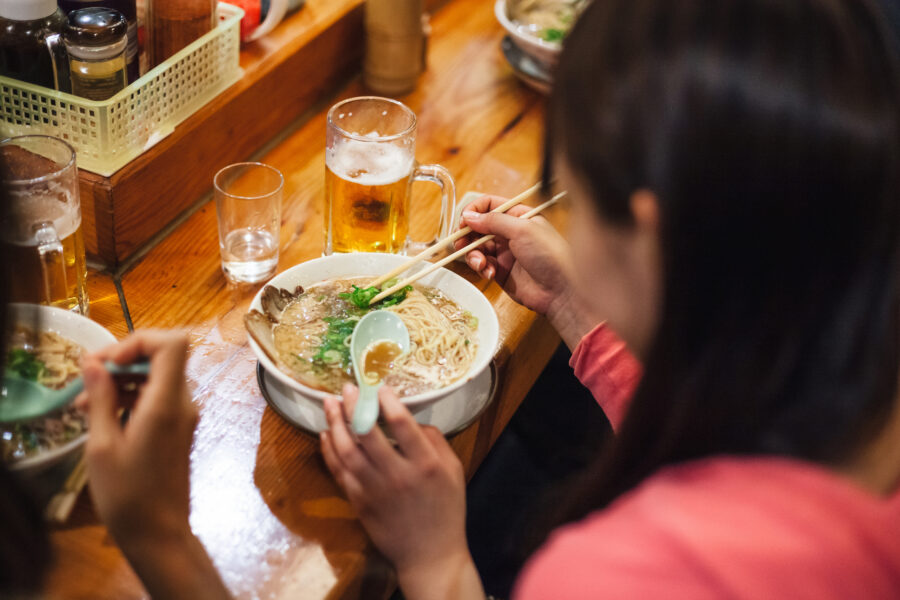
Trying new foods is one of the most exciting parts of studying abroad in Japan, but understanding a few dining customs can help you remain respectful while sharing meals with locals.
Before eating with others, many Japanese people say itadakimasu (“I gratefully receive”). After finishing, they say gochisōsama deshita (“thank you for the meal”).
At many restaurants, a host or server will seat you. Restaurants often provide complimentary water or tea, along with a wet towel to clean your hands before eating.
A few other important Japanese dining etiquette tips include:
- If chopsticks are provided with a chopstick rest, place them back on the rest when you’re not using them. Never stick chopsticks upright in your rice bowl.
- Use serving utensils when sharing food and avoid passing food directly using your chopsticks.
- Avoid loudly blowing your nose, burping, or making excessive chewing noises.
- Don’t be loud in formal restaurant settings; imitate the noise level of those around you.
- Don’t walk while eating or drinking, especially in crowded areas.
- Order thoughtfully and avoid taking more food than you can reasonably finish.
- At most restaurants, you’ll bring your receipt to the cashier when you’re ready to pay.
- Tipping is generally not expected and may even be politely refused.
Traditional restaurants may feature zashiki-style seating, which uses floor cushions around low tables. In these spaces, remove your shoes and slippers before stepping onto the seating area; do not step on someone else’s cushion.
Sushi, Rice, and Miso Soup
In Japan, certain dining rules apply to specific foods.
For example, when eating sushi, dip individual pieces lightly into soy sauce rather than pouring it directly over the food. Most sushi is intended to be eaten in a single bite, and splitting it into multiple pieces will ruin the beautiful presentation arranged by the itamae (sushi chef).
When rice is served in an individual bowl, it is traditionally eaten by lifting the bowl to your mouth with one hand and using the chopsticks with the other.
Miso soup is often sipped directly from the bowl, and chopsticks are used to eat any solid ingredients.
Temple and Shrine Etiquette
Japan is home to hundreds of thousands of temples and shrines, so you’ll likely visit some of these important religious sites during your study abroad program.
Japan’s two major religions are Buddhism (which originally came to Japan from Korea) and Shinto, a spiritual tradition that is indigenous to Japan. Whether you’re visiting a Buddhist temple or Shinto shrine, approach these spaces calmly and respectfully. Speak quietly, dress appropriately, and follow any posted instructions.
Many temple buildings require visitors to remove their shoes before entering. Wear clean socks or bring a pair specifically for indoor use. Hats should typically be removed before entering sacred buildings.

Photography is often permitted on temple and shrine grounds but may be prohibited inside certain buildings.
At Buddhist temples, you may see incense available for purchase. Visitors can light incense, gently wave out the flame, place the incense in the burner, and offer a short prayer or moment of reflection. Participation is optional—and respectful, sincere observation is perfectly acceptable.
At Shinto shrines, you’ll often find purification fountains near the entrance. Visitors commonly use ladles to rinse their hands before entering the shrine grounds. If you choose to participate in the purification ritual, don’t return any of the water you used to rinse into the fountain. Instead, rinse your hands beside the fountain to avoid contaminating the rest of the water.
Discover Japanese Culture and History in Kyoto
Due to its status as Japan’s former capital from 794 to 1869 AD, Kyoto is one of the best places to visit Japanese temples and shrines. The city is home to several culturally and spiritually significant religious sites, many of which are UNESCO World Heritage sites, including Kinkaku-ji (Golden Pavilion) and Ryoan-ji Temple.
For this reason (and many more), students who want to study abroad in Japan should strongly consider Kyoto.
Gift-Giving and Politeness
As an international student, you may not be expected to give many gifts. However, small souvenirs or tokens of your appreciation can be thoughtful gestures to host families, language exchange partners, professors, or friends. At the end of your study abroad program in Japan, you may consider giving some small gifts to the people who have made the biggest impact on your experience.
When giving or receiving a gift, use both hands whenever possible (if you’re holding your phone, set it down first). Likewise, handing over business cards, money, important documents, or other items of significance with both hands is a simple way to show respect for the person and item you’re exchanging.
Politeness also extends to everyday interactions. You’ll probably hear the term sumimasen frequently, which can mean “excuse me,” “sorry,” or even “thank you” depending on the context. This term is especially useful when trying to politely get your server’s attention at a restaurant.
Common Mistakes to Avoid
Nobody expects international students to know every social rule immediately. And the Japanese people are generally very understanding and will appreciate your sincere efforts to learn and adapt to their customs.
That said, here are a few common etiquette mistakes worth avoiding in Japan:
- Speaking loudly on public transportation
- Forgetting to remove shoes when entering someone’s home
- Standing in the middle of escalators and blocking traffic
- Eating or drinking while walking
- Taking photos in areas where photography is prohibited
- Misusing chopsticks
- Ignoring queues or cutting in line
- Being overly casual in temples, shrines, or other sacred spaces
- Pouring soy sauce over sushi
- Tipping
If you’re ever unsure what rules to follow, politely ask a local or watch what the people around you do.
Japanese customs for visitors are best learned through experience. Study abroad in Kyoto with AIFS Abroad and experience them for yourself.
Learning Japanese etiquette for students before arrival can make daily life in Japan smoother, more comfortable, and more rewarding (plus, it can get you even more excited for the program!).
If you’re ready to explore Japanese culture for yourself, AIFS Abroad offers the opportunity to live and learn in Kyoto while developing valuable intercultural skills that can benefit you long after your program ends.